Your Mother Your Mother Your Mother (2026) Movie Plot Breakdown And Ending Explained
I walked out of a late-night screening still holding my popcorn bucket like it owed me an apology. That’s the effect this movie has. It doesn’t hand you catharsis — it makes you sit in the discomfort of a man who can gut someone with a blade but can’t figure out how to keep his newborn daughter fed. That’s the whole engine of Bassam Tariq’s latest, and honestly, it’s one of the strangest, most quietly devastating action films to come out of a major studio in years.
I’m not here to give you a sanitized recap pulled from a press kit. I watched this thing twice — once for the violence, once for the grief hiding underneath it — and I want to talk about why it works, where it stumbles, and what that ending is actually trying to say.
A Title That’s Doing More Work Than You Think
Before the film even starts, it’s already making an argument. The repetition in the title comes from a well-known saying attributed to the Prophet Muhammad, where a mother’s claim to care and devotion is stated three times before the father even gets a mention. Tariq isn’t just being cute with the phrasing — he’s building the entire moral spine of the movie around that idea, then handing it to a man who is, structurally speaking, the least equipped person alive to embody it.
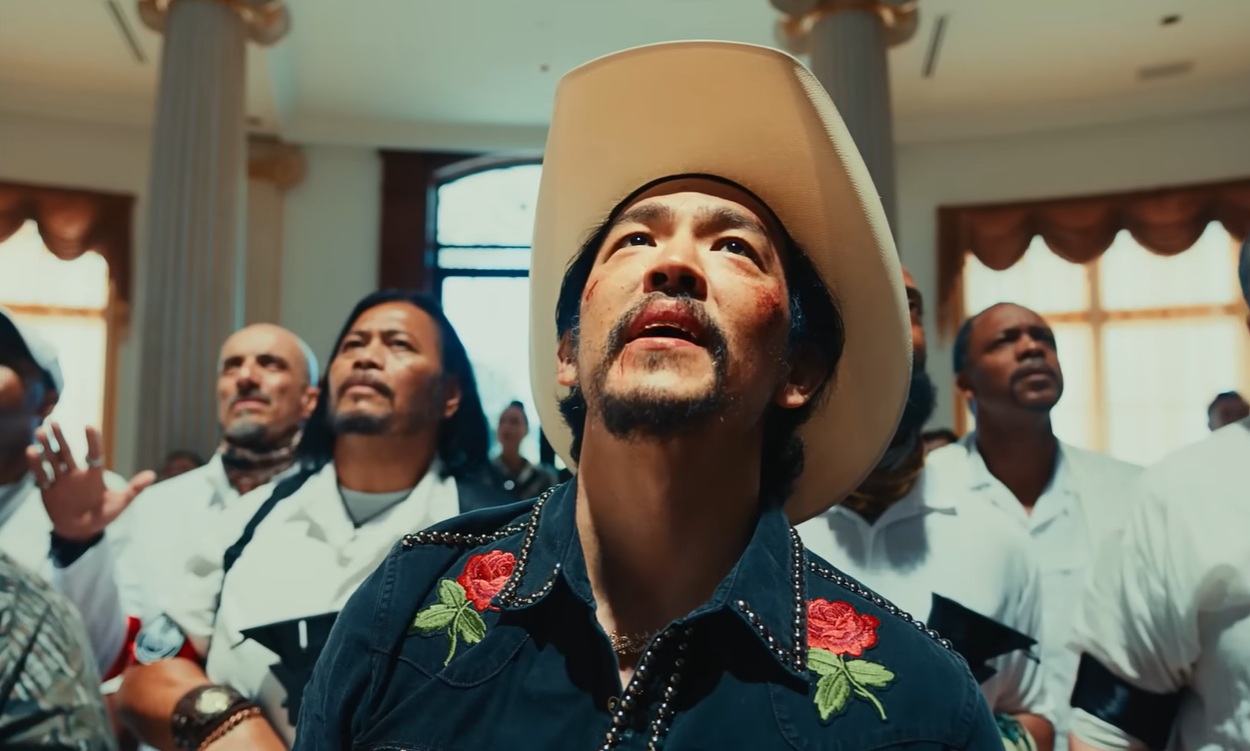
That’s the irony that makes the film sting. Our protagonist isn’t a mother. He’s a killer. And the movie forces him to try anyway.
Meet Latif: Suburban Dad, Professional Killer
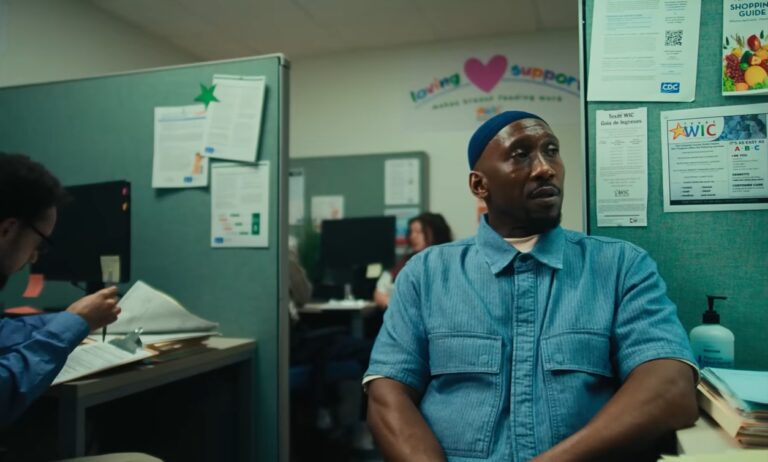
Mahershala Ali plays Latif, a Houston family man who prays five times a day and also, somewhere between school pickup and dinner, ends people for a living. It sounds like a premise ripe for slick action-comedy nonsense, but the film refuses that tone almost entirely. There’s no wink to the camera. No cool one-liners. Latif’s double life isn’t played for irony — it’s played as a slow-burning spiritual wound.
Everything changes when his wife dies without warning. Suddenly he’s not managing two lives anymore — he’s drowning in one, alone, with three kids:
- Fatia — his teenage daughter, sharp and quietly furious, who becomes the film’s conscience
- A young son, mostly caught in the emotional crossfire
- A newborn infant daughter, whose need for milk becomes the plot’s most unlikely ticking clock
Latif does the thing every parent fantasizes about when their job becomes unbearable — he walks away mid-task, target left undealt-with, and tries to just… stop. Be a dad. Retire from carnage.
Anyone who’s ever worked a job that “doesn’t let people leave” already knows how that goes.
The Milk Run That Turns Into a War
Here’s where the film gets genuinely inventive. Rather than build its second act around a typical revenge plot or a heist, Tariq turns the narrative engine into something almost absurdly domestic: Latif has to find breast milk for his baby. That’s it. That’s the mission driving a huge chunk of the runtime.
It sounds almost darkly comic on paper, and there are moments where the tonal whiplash is intentional — one scene has Latif in a brutal, tightly choreographed melee against armed men, shot on grainy 16mm film that makes every hit feel physically real, and in the very next breath he’s in the back seat of his car, gently rocking a screaming infant. That juxtaposition is the whole movie in miniature: violence and tenderness refusing to stay in separate lanes.
Of course, his old life doesn’t let him quietly run errands. Two factions want him back on the board:
| Faction | Leader | What They Want |
|---|---|---|
| Old crime syndicate | Mike | Latif back to work — no exceptions |
| Rival faction | Pastor Haun Yoon | Territory, leverage, and Latif as collateral |
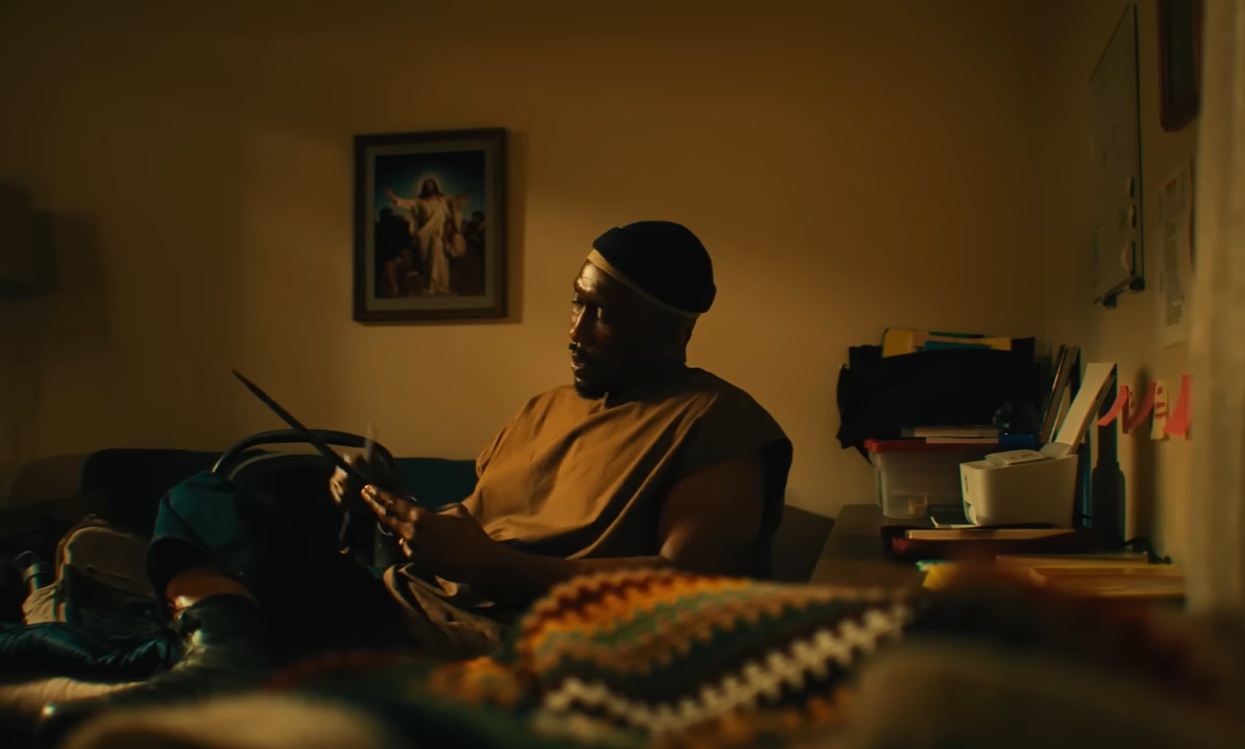
John Cho as Pastor Yoon is genuinely one of the year’s best surprises. He plays a cowboy-coded, religiously fanatical crime figure locked in a bloody rivalry with Mike, and there’s a chilling stillness to how he delivers menace — no shouting, just certainty. It’s the kind of performance that makes you rethink what you assumed an actor’s range even was.
Faith as Ballast, Not Decoration
What separates this from a hundred other “hitman wants out” thrillers is how seriously it treats Latif’s religious life. Giancarlo Esposito shows up as Abdul Malik, a local Imam who becomes something like Latif’s moral tether throughout the chaos. He’s not a plot device dispensing wisdom in a single scene and disappearing — he’s a recurring presence, pushing back against Latif’s rationalizations, refusing to let him treat his violence as something separate from his soul.
I appreciated that the film doesn’t use faith as set dressing or shorthand for “troubled but spiritual man.” It treats Latif’s Islam as an active, wrestling force in his decision-making — sometimes a comfort, sometimes an accusation.
Fatia: The Film’s Real Center of Gravity
If Latif is the blade, Fatia is the conscience aimed directly at his throat. As his teenage daughter watches her father’s carefully hidden life collapse into their living room, she becomes less of a supporting character and more of a mirror — she sees exactly what the violence is doing to him, and she’s terrified it’s going to consume what’s left of their family.
Her arc is where the film’s emotional stakes actually live. The action is impressive, sure, but it’s Fatia’s fear — quiet, simmering, occasionally exploding — that gives the third act its weight.
Your Mother Your Mother Your Mother Movie 2026: USA Release Time, Schedule, Plot, and Cast Details
The Ending: Not a Victory Lap
Without spoiling every beat, the climax puts Latif face-to-face with Pastor Yoon in a sequence scored by Son Lux that trades adrenaline for dread. This isn’t a hero’s finale where the protagonist walks away unscathed and vindicated. Tariq is explicit that Latif’s real strength isn’t his combat skill — it’s his willingness to sacrifice everything he has left, body and freedom included, for his kids.
He does manage to break the grip both Mike and Yoon held over his life. But the film is clear-eyed about the cost. The final images linger on the children — especially Fatia — who now have to carry the aftermath of their father’s choices into a future none of them asked for.
The closing implication is quietly brutal: Latif could never actually be a mother in the way the title demands, but the desperate, blood-soaked odyssey he went through across Houston was, in its own broken way, an act of that same devotion.
Worth Your Time?
Honestly, yes — with the caveat that this isn’t a comfort watch. It’s tense, spiritually heavy, and emotionally exhausting in the best way arthouse-adjacent studio films can be. Ali gives one of his most physically and emotionally demanding performances yet, and Tariq proves he can direct large-scale action with the same precision he brings to intimate character drama.
If you go in expecting a slick action vehicle, you might be thrown by how much grief and theology it’s carrying. If you go in ready for a film that treats violence as a spiritual crisis rather than a spectacle, this one’s going to stick with you.