Ha-Chan Shake Your Booty Crow Meaning: The Symbolism of Luis and Yatagarasu Explained
I’ll admit something: when a six-foot crow first strolled into Haru’s living room, I laughed out loud. Then, about ten seconds later, my throat tightened. That whiplash is the whole magic trick of Ha-Chan, Shake Your Booty!, and it’s why the Ha-Chan Shake Your Booty crow meaning has become the thing everyone argues about after the credits roll.
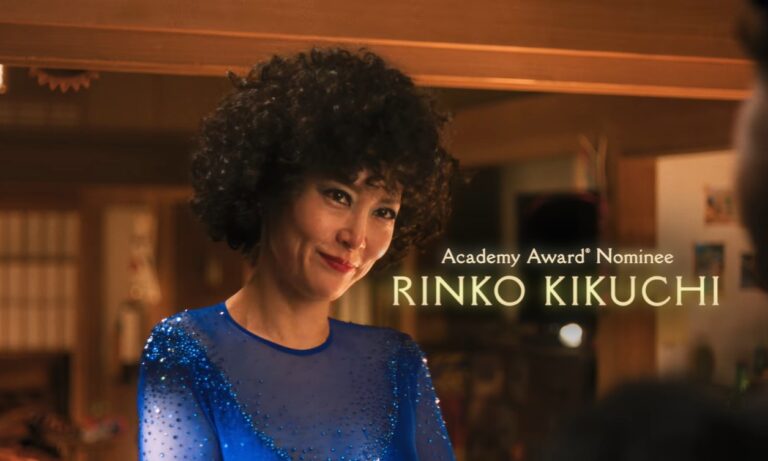
Josef Kubota Wladyka’s 2026 comedy-drama musical, led by Oscar-nominated Rinko Kikuchi, follows Haru (Ha-Chan to the people who love her) as she tries to find her rhythm again in Tokyo’s amateur Latin ballroom scene. Her Mexican husband, Luis (Alejandro Edda), died mid-dance. Since Sundance, the internet has been busy with Reddit threads, Letterboxd hot takes, and YouTube essays, all circling one question: what is that bird?
I’ve watched enough magical realism to know the trap: explain it too hard and you kill it. So let me walk through it the way I’d talk about it with a friend over noodles.
Where to Watch Ha-Chan, Shake Your Booty! (2026) Online: Is It Streaming on Netflix, Max, or Prime?
First, the setup that makes the crow necessary
The opening is pure joy. Haru and Luis dance, and Wladyka films them almost floating off the ballroom floor, like the two of them are halfway to heaven already. Then Luis collapses in the middle of a dance. Heart attack. Gone.
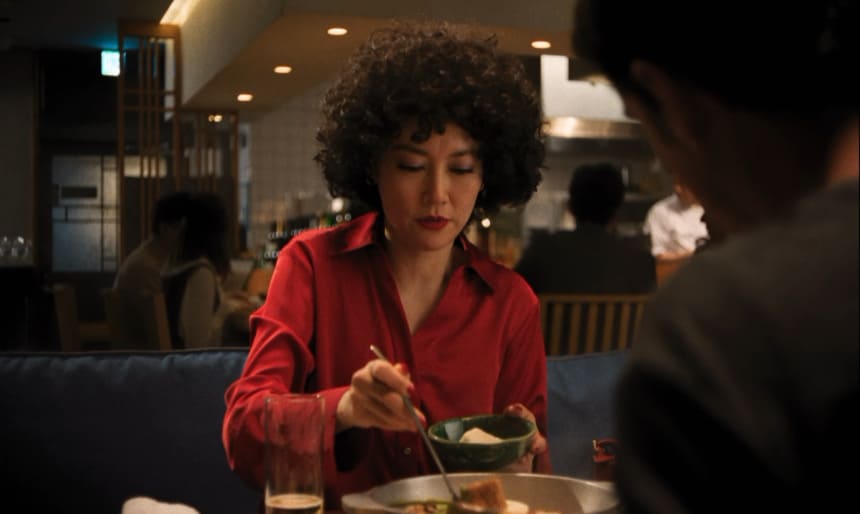
Cut to nine months later. Haru is stuck. She still sets a place for Luis at dinner every night. Her blunt sister Yuki and her chaotic cousin Hiromi finally haul her back to a dance studio, and that’s where things get complicated: she develops a crush on Fedir (Alberto Guerra), a tattooed instructor who makes her feel something again. And with that feeling comes guilt, the kind that says wanting another person is a betrayal of the one you lost.
That’s the exact moment the bird shows up.
Real ghost or grief hallucination?
The crow is obviously a person in a realistic, oversized bird suit. The film never hides that, and it never explains it either. Is Haru hallucinating? Or is something genuinely supernatural walking through her apartment?
The movie leans toward the second option. Every so often the camera catches the birdman standing in the background while Haru looks the other way. Nobody is projecting that; it’s simply there. I love that choice. It respects both readings without forcing you to pick, which is how grief actually works. You know the person is gone, and yet some part of you keeps setting the table.
Reading #1: The crow is Luis
The simplest reading is also the most heartbreaking. The crow is Luis, or at least the shape his presence takes.
Think about how Haru reacts. A giant predatory bird walks into her home and she doesn’t scream or run. She’s tender with it. She dances with it in private. That’s not how you treat a stranger; that’s how you treat someone whose silence you already know by heart.
The crow is comfort, plain and simple. It’s the ‘torch’ she’s still carrying, given a body so she doesn’t have to let go yet. And when reality gets ugly (like when she learns Fedir is in an open marriage), the crow is where she retreats.
Reading #2: Yatagarasu, the guide bird
Here’s where the film gets smarter than it looks. Wladyka, who has mixed Polish and Japanese roots, didn’t pick a crow at random. In Japan, crows aren’t just city scavengers or bad-luck omens. Shinto mythology has Yatagarasu, the three-legged crow, a divine messenger sent by the gods to guide people through unfamiliar and dangerous territory. Lost souls, emperors, warriors: Yatagarasu shows them the path.
Put that lens on the film and Luis stops being a haunting and becomes a guide. He isn’t lurking out of jealousy. He’s there because Haru is lost in the woods of her own mourning, and someone has to walk with her.
The crow’s behavior backs this up:
- It watches, it doesn’t judge. Kikuchi has said the bird’s constant, silent stare stayed with her on set. On screen, that gaze feels protective, not accusing.
- It never pushes. Haru lies, stumbles, and acts erratically, and the crow just stays close.
- It shows up at the edges. Present in the moments of confusion, absent from the moments of clarity.
Reading #3: Death and rebirth in one costume
There’s a third layer, and this is where I got a little obsessed. Critics have compared the bird to the macaw in Tuesday (2024), which personifies death itself. It’s a fair comparison, but the two birds do opposite jobs.
The macaw in Tuesday is mortality made flesh. Wladyka’s crow is a two-way street: it’s the monument to what happened and the bridge to what comes next. Every time Haru looks at it, she’s reminded of her loss. But by dancing with it, she turns pain into movement. Grief becomes choreography.
Here’s a quick comparison of the three ways the crow functions:
| Reading | What the crow is | What it does for Haru |
|---|---|---|
| Luis’s avatar | A physical stand-in for her husband | Gives her comfort and a safe place to retreat |
| Yatagarasu | A Shinto guide bird | Leads her through the darkness of mourning |
| Death and rebirth | A monument and a bridge | Lets her hold her pain until she can integrate it |
None of these cancels the others. The best movies let one image carry three meanings at once, and this one does it while wearing feathers.
The subway finale: where it all pays off
The last big set piece is a wonderfully unhinged dance number on a Tokyo subway car, with random passengers swept up in it. It’s ridiculous and gorgeous in equal measure, and it’s the emotional answer to everything that came before.
By then, Haru has stopped hiding. She’s accepted that life is messy, that desire doesn’t erase love, and that moving forward isn’t the same as forgetting. Once she’s dancing on her own terms, the crow has nothing left to do. Yatagarasu did its job: it led her out of the dark woods.
Why this ending works for me
I’ve seen a lot of grief movies that treat mourning like a straight line with a tidy finish. This one treats it like a dance floor at 2 a.m.: crowded, awkward, occasionally glorious. The crow is the film’s way of saying the dead don’t vanish when we start living again. They become the quiet presence at the edge of the room, nudging us back toward the music.
And honestly? That’s why the crow meaning in Ha-Chan, Shake Your Booty! lingers longer than the jokes, the rumbas, or even the Dirty Dancing homage. It’s a love story that keeps going after one of the lovers is gone, and it reminds you that the best thing you can do for someone who’s watching over you is to get up and shake your booty.