How Did Airis Sister Die in Never After Dark? 2026 Movie Backstory Explained
I walked into my Never After Dark screening expecting another entry in the endless parade of J-horror imports that mistake ‘slow’ for ‘scary.’ I walked out texting three people the same sentence: this is the saddest ghost story I’ve seen in years, and it’s not even trying to make you cry.
Dave Boyle’s film has been racking up festival hardware since its SXSW premiere — the Midnighter Audience Award, the Overlook Grand Jury Prize — and now that Magnolia has it in wide release stateside, the internet has landed on exactly one question. Everyone wants to know how Airi’s little sister Miku actually died. I get why. But having sat with this movie for a few days now, I think that question is the least interesting thing about it, and the film knows that too.
Who Is the Killer in Never After Dark (2026)? The Ending and Supernatural Twist Fully Explained
Two Sisters, One of Them Isn’t Breathing
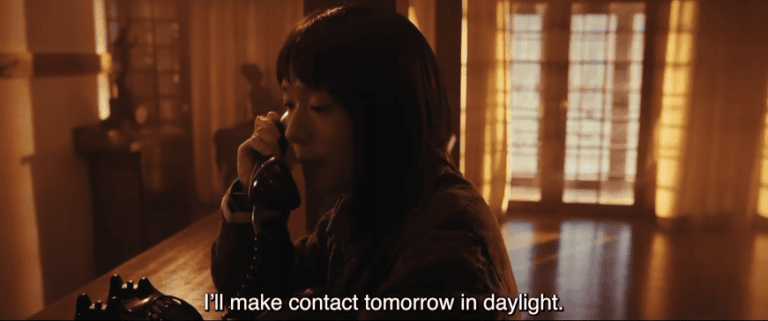
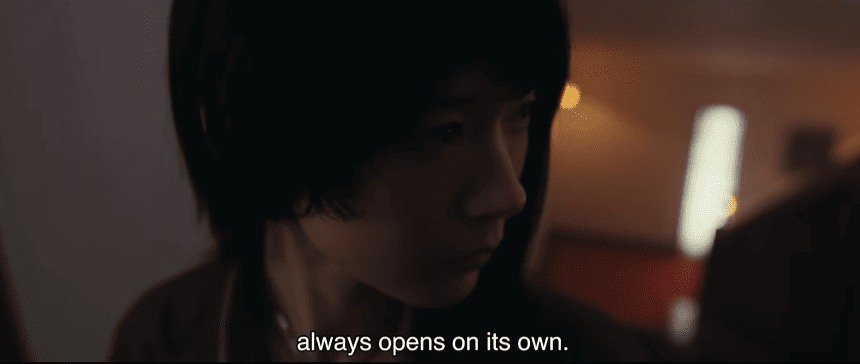
Here’s what makes the setup so quietly devastating: Miku is dead from the first frame. No mystery reveal, no rug-pull. Moeka Hoshi plays Airi, a traveling psychic medium who wanders rural Japan performing exorcisms for hire, and Kurumi Inagaki plays Miku — the kid sister who tags along everywhere, except she only exists in reflections. Rearview mirrors. Dark train windows. A television nobody bothered to turn on.
Most haunted-house movies treat a ghost as a threat or a twist. Boyle treats Miku as a roommate. She bickers with Airi about nothing. She teases her. There’s a lived-in sibling rhythm to their scenes that honestly plays more like a hangout movie than horror, right up until you remember one of them has been dead for years and the other one built an entire career around never letting go of her.
That’s the trick of the film, and it’s a good one: the horror isn’t the ghost. The horror is what grief does to the living person who refuses to move on.
So How Did Miku Actually Die?
Straight answer: the movie won’t tell you, and I’ve made peace with that.
Boyle skips the flashback-heavy origin story you’d expect from a Western remake. No accident reenacted in slow motion, no coroner’s report disguised as exposition. What we get instead is Airi’s guilt, delivered in fragments across quiet, heavy conversations — the kind where nobody says the actual thing out loud. The film leans hard into the idea that Airi believes her own budding occult obsession as a kid somehow invited something dark toward her family, and that Miku paid for it.
Is that literally true within the story? Unclear. Is it true in Airi’s head, which is the only place this movie actually cares about? Completely.
What the Movie Actually Confirms
- Miku died young, well before the story begins.
- Airi’s exorcism ritual — burning her own hair over a candle, staring into a spinning mirror — physically costs her something every single time, visualized through her increasingly wrecked haircut.
- Airi has no home, no living friends, and no reason to stop traveling except the ghost riding shotgun in her car.
I know some horror fans wanted a hard answer here. I get the itch — we’re trained by decades of genre films to expect the third act to hand us a tidy explanation. But withholding it is the more honest choice. Grief rarely comes with a clean cause. It just sits there, permanent and unexplained, and you build your whole life around working with it.
The Twist Nobody’s Talking About Enough
Everyone’s so fixated on Miku’s backstory that the film’s actual gut-punch is getting buried in the discourse, so let me flag it: the real threat in this movie isn’t supernatural at all.
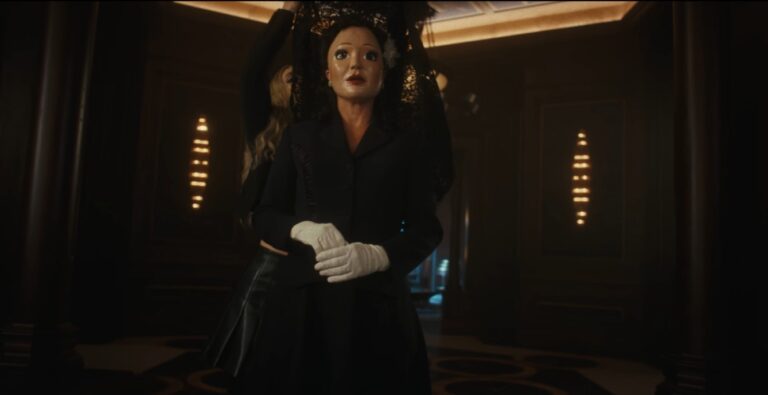
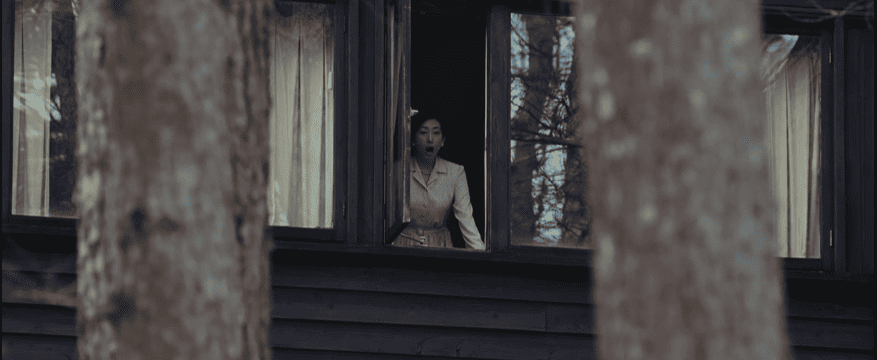
Once Airi gets deep into the isolated hotel to deal with the film’s central entity — a grotesque, folklore-rooted figure called the Gaping-Mouth Man, played with genuine menace by Mutsuo Yoshioka — Miku warns her that something’s off. This spirit doesn’t play by the rules the sisters know. And the film pivots hard, sliding from ghost story into something closer to a time-warped thriller involving a living, breathing serial killer operating in the present.
Remember the line earlier in the film where Airi admits she’s far more afraid of the living than the dead? That’s not a throwaway. That’s the whole third act. And it’s Miku — dead Miku, mirror-bound Miku — who has to talk her terrified sister into finally facing a threat with a pulse instead of running from it. It’s a genuinely clever swing, and it’s the reason this film sticks with you longer than a standard-issue haunting would.
Where the Film Splits Audiences
| The Case For Ambiguity | The Case Against | |
|---|---|---|
| Argument | Leaving the death vague keeps focus on Airi’s grief, not plot mechanics. | Some viewers wanted a flashback to bridge the emotional gap. |
| Where you’ll see it | Most critics, general horror press. | A vocal minority on Letterboxd and Reddit threads. |
| My take | The restraint is the point. | Fair complaint, but I don’t think it needed fixing. |
I’ve scrolled enough Letterboxd reviews at this point to see the split clearly. A chunk of horror fans wanted more concrete flashbacks — something to physically anchor Miku’s death instead of leaving it as subtext. Fair enough, honestly, that’s a legitimate craft complaint. But the louder consensus, and the one I land on myself, is that the ambiguity is the craft. Airi’s whole career is a coping mechanism dressed up as a job. She exorcises other people’s ghosts for money because it’s the only way she gets to keep talking to her own.
Why This One’s Actually Going to Stick
I don’t throw around comparisons to genre heavyweights lightly, but the fact that people like Stephen King and Scott Derrickson have been publicly gushing about this one tells you it’s landing outside the usual horror-Twitter bubble too. And I think it’s because Never After Dark isn’t really selling scares as its main product. It’s selling a very specific, very recognizable kind of grief — the kind where you’d rather live half a life next to a ghost than a full one without them.
Miku’s cause of death isn’t the mystery worth chasing here. The real question the film’s asking is whether Airi will ever let her sister actually rest, and whether she even wants to. By the time the credits hit, that question gets answered in a way that’s quietly one of the more affecting endings horror’s given us in 2026 — no jump scare required.