Princess Mononoke Ending Explained: The 2026 Remaster and the Real Meaning Behind Miyazaki’s Masterpiece
I watched Princess Mononoke again this month, on a big screen, thanks to the 4K restoration doing the rounds this September. And I’ll be honest — I went in half-expecting nostalgia to do the heavy lifting. It didn’t need to. Nearly thirty years on, this film still lands like a gut punch, and I think that’s because it was never interested in comforting anyone in the first place.
Let’s get one thing out of the way first, since the internet loves to manufacture noise: no, there’s no live-action reboot, no surprise Hollywood sequel, no secret Ghibli project hiding behind those fan-edited YouTube trailers. What’s actually happening is simpler and, frankly, better — GKIDS is putting the original 1997 film back into theaters as part of its Ghibli Fest lineup, remastered, uncut, and finally visible the way Miyazaki intended it. No gimmicks. Just the movie, bigger and sharper than most of us have ever seen it.
And that’s plenty, because the ending of this film is still one of the most misunderstood pieces of animated storytelling I know.
A War Nobody Really Wins
By the time the third act detonates, you’re watching three factions collide at once: the ironworkers of Tatara Ba under Lady Eboshi, the forest gods rallying behind the dying boar deity Okkoto, and Jigo’s opportunistic hunters, who couldn’t care less about either side — they just want the Forest Spirit’s head, because the Emperor’s been promised it buys immortality.
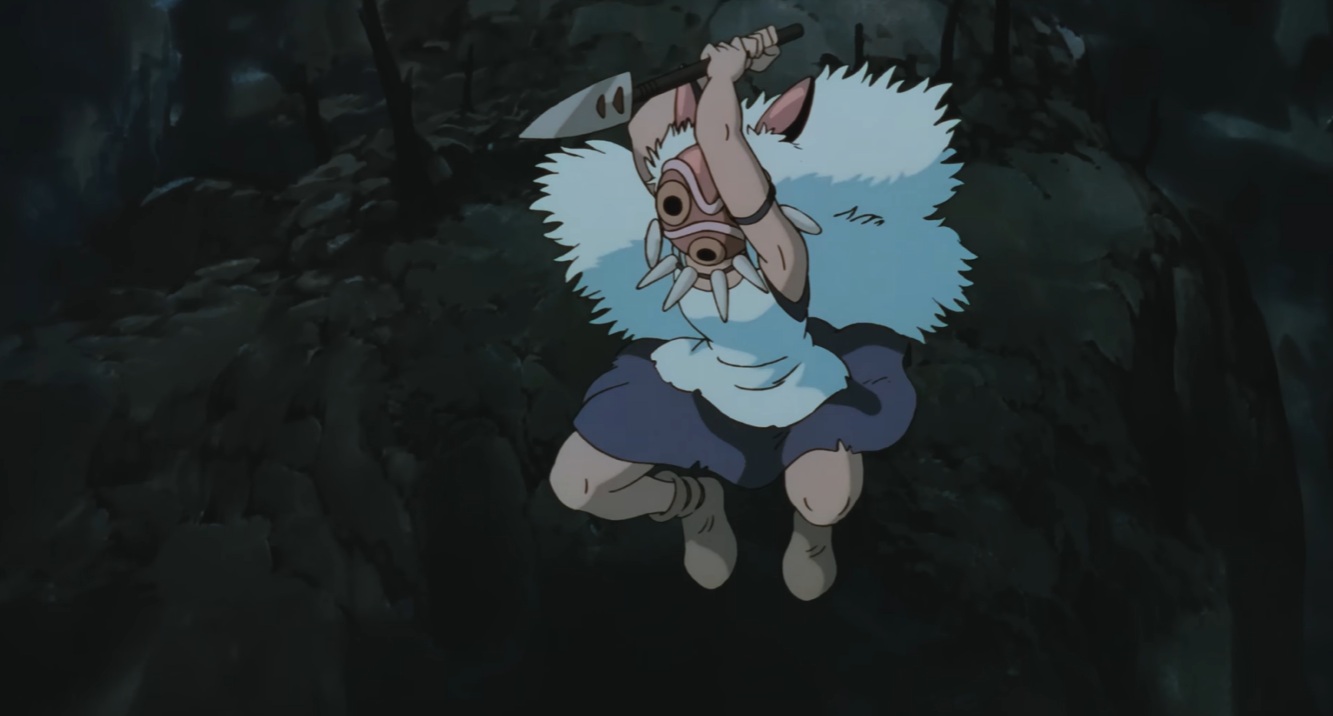
Eboshi gets her shot. Literally. She blows the head off the Shishigami mid-transformation, right as it’s shifting from its daylight deer form into the towering night-walker. It’s meant to be her victory lap. Instead, it triggers something closer to a biblical plague — a headless god stumbling blindly across the land, trailing black ooze that kills everything it brushes against, turning an ancient forest into a corpse in real time.
Nobody planned for that. That’s the joke buried inside the tragedy: the decisive human action, the one meant to end the conflict, is actually what nearly ends everything.
The Fix Isn’t Heroic. It’s Just Necessary.
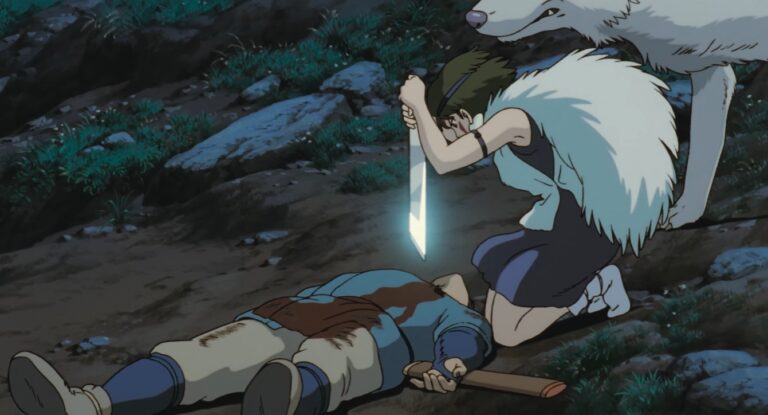
What I love about the resolution is how unglamorous it is. Ashitaka and San don’t defeat anyone. They don’t slay a villain. They physically wrestle a severed head away from Jigo’s men and haul it, on foot, back to a dying god so it can die properly — or not die, depending on how you want to read it.
Because here’s where Miyazaki gets genuinely slippery with metaphysics: the Shishigami’s body is destroyed, permanently, visibly, no walking that back. And yet Ashitaka tells San something that reframes the entire film:
“The Forest Spirit cannot die. He is life itself.”
Both things are true simultaneously. The god is gone. The green returns anyway, sprouting across scorched earth within seconds of the spirit’s collapse. Miyazaki isn’t interested in “did it survive” as a plot question — he’s interested in the idea that life-force and individual form aren’t the same thing. You can kill the shape without killing the principle. That’s not a twist, it’s a worldview, and it’s why this film reads more like an animist parable than a Western fantasy epic.
No, San and Ashitaka Don’t End Up Together — And That’s the Actual Ending
This is the part that still trips people up, especially audiences raised on the assumption that surviving a shared catastrophe automatically earns you a romantic payoff. It doesn’t happen here, and honestly, it shouldn’t.
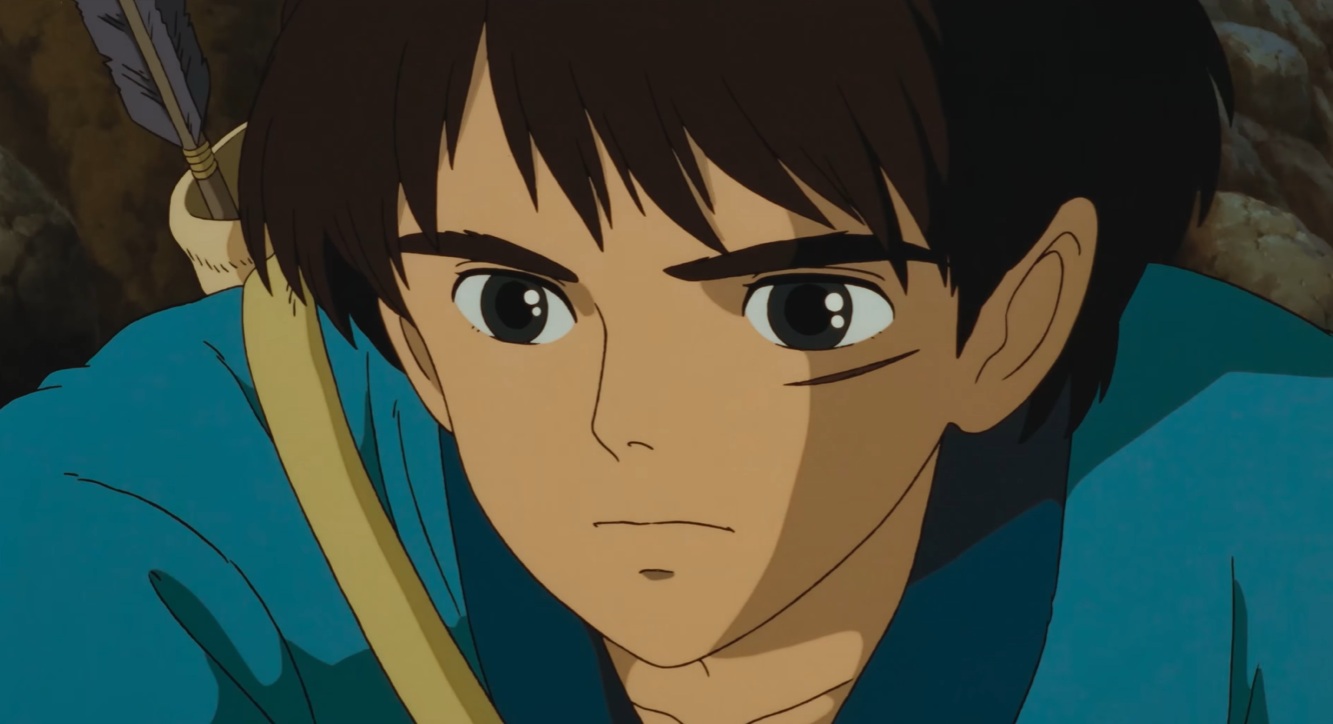
San says it plainly:
“I love you, Ashitaka. But I cannot forgive humans.”
She goes back to the wolves. Ashitaka goes back to Iron Town. Neither of them budges, and neither of them is punished narratively for holding their ground. What you get instead is a kind of long-distance vow — not a romance in the conventional sense, but a bridge between two positions that can’t actually merge without one side erasing the other.
I’d argue this is the most quietly radical choice in the entire film. A lesser script forces reconciliation because audiences crave closure. Miyazaki lets the tension stay unresolved, because the tension is the truth of the situation. Humans and the wild world aren’t going to fuse back into one thing. The best available outcome is mutual respect across a permanent gap.
Eboshi Doesn’t Get Redeemed. She Gets Humbled.
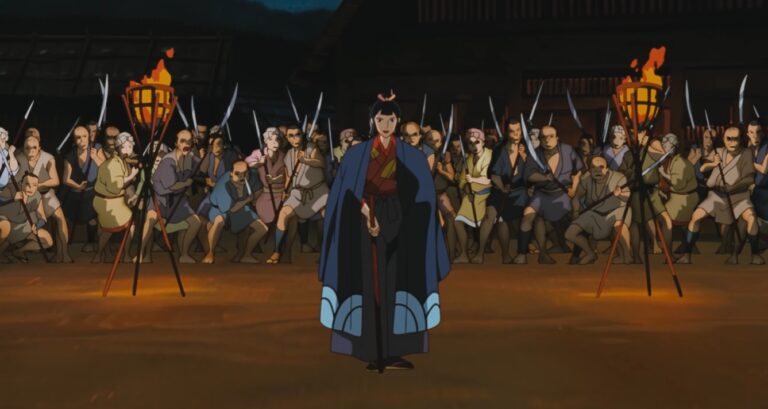
I want to push back gently on the word “redemption” here, because Eboshi was never coded as a villain to begin with — that’s what makes her so good. She runs a settlement for lepers and former sex workers, gives them dignity and purpose, and genuinely believes she’s protecting her people. Her war against the forest isn’t cruelty; it’s a pragmatic, blinkered kind of industrial logic.
What she loses is her arm, her fortress, and her certainty. Her final line —
“We will start over. We will build a better town.”
— isn’t triumphant. It’s someone recalibrating after being proven catastrophically wrong about the cost of unchecked expansion. Iron Town doesn’t stop being an industrial settlement. It just stops pretending the forest is an obstacle to be erased.
| Character | Where They Land | What It Represents |
|---|---|---|
| San | Returns to the forest with the wolves | Refusal to assimilate; loyalty to the wild |
| Ashitaka | Stays in Iron Town | Human responsibility toward rebuilding |
| Eboshi | Humbled, rebuilding with new awareness | Progress recalibrated, not abandoned |
| The Kodama | Reappears in the final frame | Nature’s quiet, ongoing recovery |
That Last Shot
The film’s closing image is almost embarrassingly simple: one small Kodama, standing in a patch of new grass. Earlier, we watched these little tree spirits drop dead by the dozen as the ecosystem collapsed. Their return — just one, not a triumphant chorus of them — is Miyazaki’s version of hope, and it’s deliberately understated. Not “everything’s fine now.” Just: something is still alive, and that’s enough to build on.
That restraint is, for me, the whole reason this film has aged so well while a hundred other eco-fables from the same decade feel dated or preachy. Miyazaki never tells you nature “wins.” He tells you it persists, quietly, indifferently, whether or not humans deserve it to.
Why This Still Matters Nearly Thirty Years Later
Watching it again on the big screen this year, with the added weight of everything happening to actual forests and actual industries right now, the ending doesn’t feel like a period piece. It feels uncomfortably current. Miyazaki wasn’t writing a fantasy about magic wolves and iron mines — he was writing about the exact bind we’re still in: the tools that keep people fed and housed are frequently the same tools tearing apart the systems that keep us alive at all.
The film refuses to hand you a villain to blame or a hero to worship. Everyone is compromised. Everyone survives by giving something up. And the closest thing to a happy ending you get is two people, in love, choosing to stay apart because staying apart is the only honest option left to them.
That’s not a cop-out. That’s the most mature thing an animated film has ever said about coexistence, and it’s part of why I’ll keep going back to see this one every time it gets a re-release.