Monster Lizzie Borden Ending Explained: What Happened to Maggie Sullivan in the Finale?
I went into Carnival, the finale of Ryan Murphy and Ian Brennan’s fourth Monster season, fully braced to roll my eyes at another “shocking twist for the sake of a twist.” Anthology true-crime television has trained us to expect a jolt in the last ten minutes, and streaming algorithms reward exactly that kind of ending — the one that gets clipped, screenshotted, and argued about on X the next morning. But the thing that actually stayed with me wasn’t the Aileen Wuornos crossover everyone’s been screaming about. It was Bridget “Maggie” Sullivan, quietly falling apart in a mountain shack nobody in the show even bothers to name.
That’s the part of this season I think deserves a slower, less breathless read than most of the recaps circulating right now.
A Love Story That Was Never Going to Survive the Trial
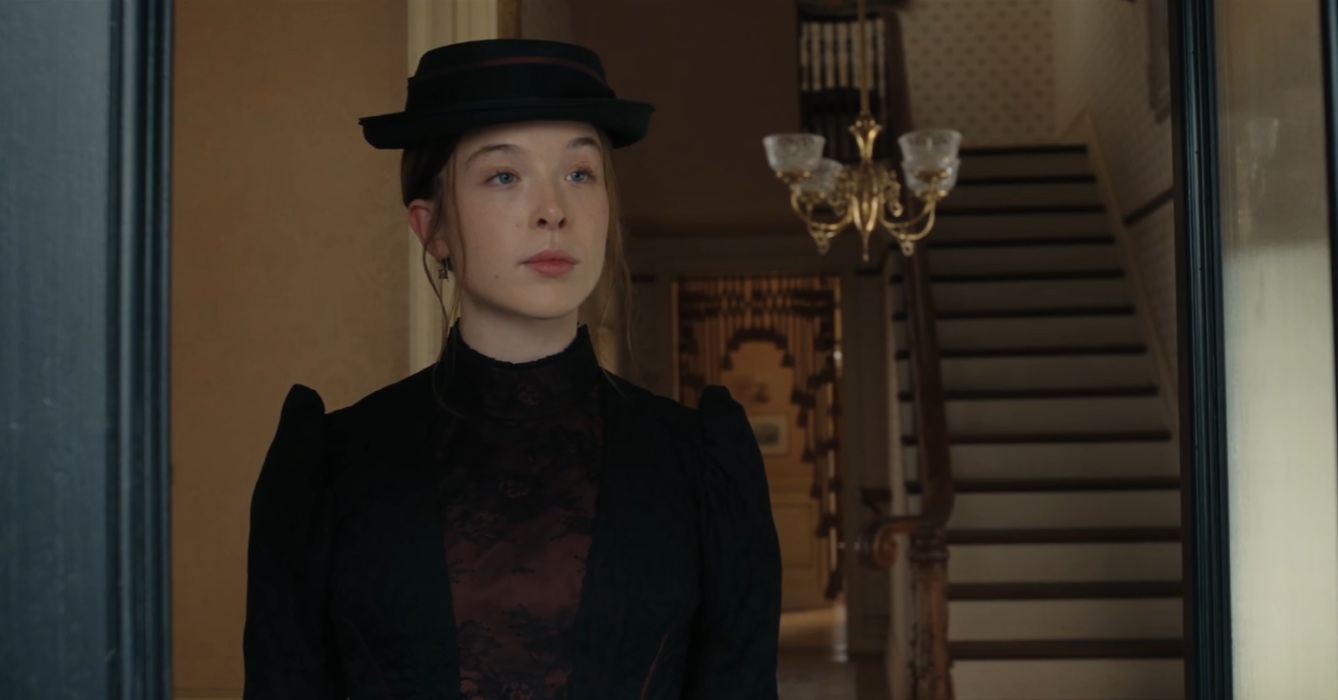
Season four spends most of its runtime building something genuinely tender between Lizzie (Ella Beatty) and Maggie (Vicky Krieps) — two women locked inside a Fall River house that functions less like a home and more like a pressure cooker of Victorian control. Their bond isn’t played as incidental; it’s the emotional engine of the whole story. Shared glances, stolen moments, a fantasy of a life that doesn’t involve answering to a man. It’s the kind of slow-burn intimacy that arthouse cinema does better than prestige TV usually bothers to, and for a few episodes, I actually believed the show was going to commit to it as the story, not a subplot.
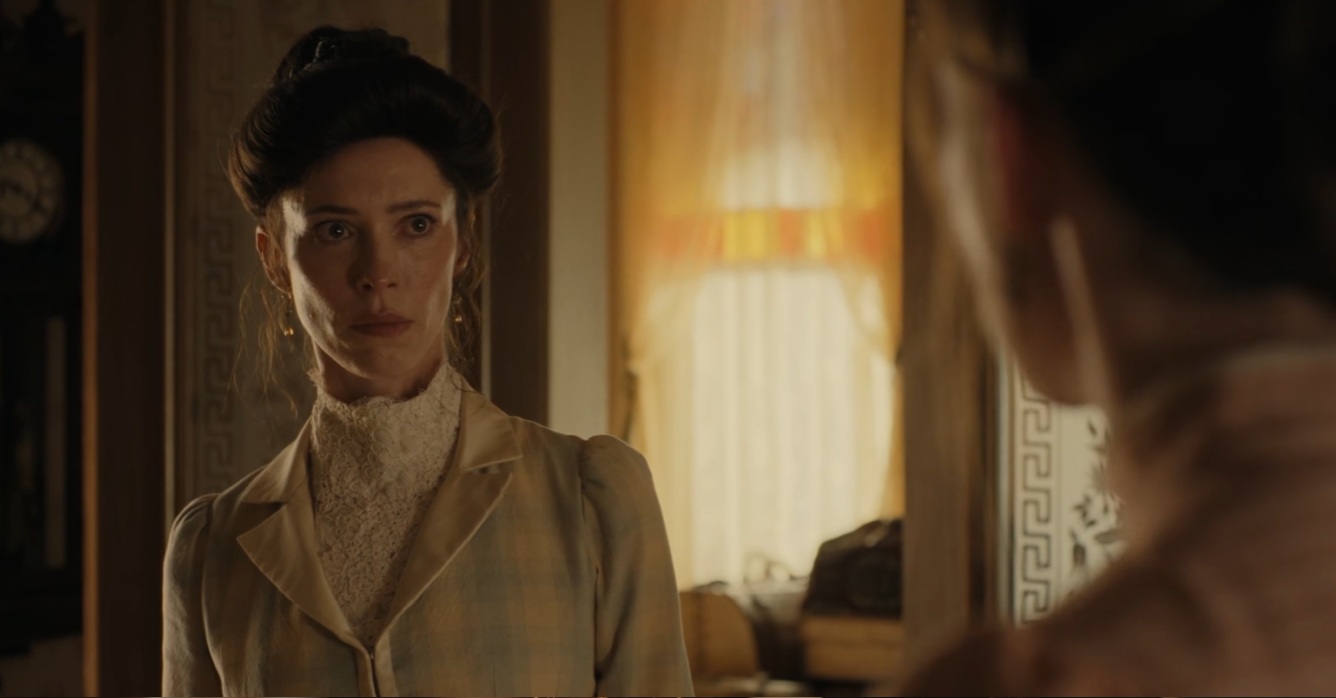
Then the axes fall, the trial ends, Lizzie walks free with her father’s money — and the show does something a lot of true-crime adaptations are too cowardly to do: it lets the relationship simply not survive contact with the real world.
What Actually Happens to Maggie in the Finale
Here’s the stripped-down version, without the internet’s tendency to over-explain it:
- Maggie leaves Fall River entirely, resettling in an isolated, run-down mountain shack far from the Borden name and everything attached to it.
- She marries an older man — not out of love, but as a kind of insurance policy against a world that offers working-class immigrant women very few other options.
- The marriage gives her no freedom at all. Her husband treats her as unpaid labor, not a partner, and Maggie’s days dissolve into a grey, repetitive domestic sentence.
- Lizzie, meanwhile, gets to keep her wealth, her name, and her freedom — the closest thing this story has to a “winner.”
The irony is almost too clean, and yet it works: Maggie escapes one domestic prison built by Andrew Borden only to voluntarily walk into another one, built by a society that never gave women like her a third option. Lizzie used violence to blow a hole in her own cage. Maggie didn’t have that luxury — or that privilege, depending on how you want to frame it — and the show never lets you forget the class gap sitting underneath their romance the entire time.
| Lizzie Borden | Maggie Sullivan | |
|---|---|---|
| Social class | Wealthy, landowning family | Irish immigrant domestic servant |
| Outcome after trial | Acquitted, inherits money | Isolated, unhappy marriage |
| Source of “freedom” | Violence, legal loophole | None — trades one servitude for another |
| Fate in finale | Alive, materially secure | Alive, spiritually hollowed out |
That table isn’t in the show, obviously — but laying it out like that is honestly the clearest way to see what Carnival is actually arguing: money buys you out of consequences. Devotion doesn’t.
The Aileen Wuornos Sequence — Bold, Messy, and (I’ll Admit It) Kind of Beautiful
Then the finale takes its big swing. The timeline jumps to 2002, to the final moments of Aileen Wuornos’s execution, with Sarah Paulson stepping in for a guest appearance that’s clearly designed to tie the Monster universe together the way Marvel ties together a cinematic universe — except with serial killers instead of superheroes. As the lethal injection takes effect, reality gets loose at the seams, echoing the same hallucinatory dissolution the show gave Ed Gein in season three.
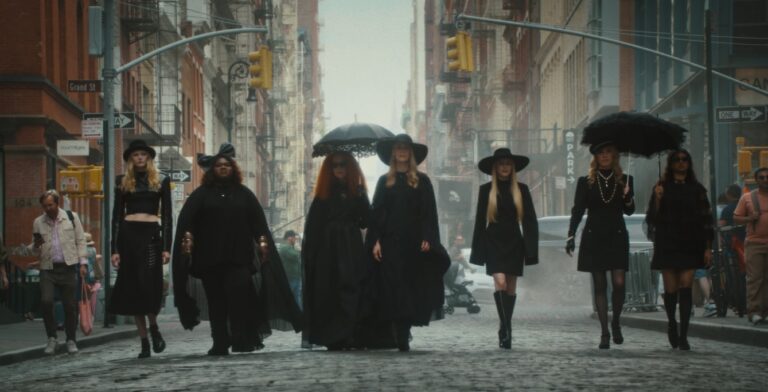
In that fractured, dying vision, Lizzie and Maggie appear together — ageless, at peace, standing side by side — and beckon Aileen forward.
I’ve seen a lot of hot takes calling this scene indulgent or overwrought, and sure, on a purely structural level it is a big ask. But thematically, I think it’s doing real work rather than just cross-promoting the franchise. Aileen Wuornos never got Lizzie’s outcome. She never got acquitted, never got to inherit anything, never got to walk away and just quietly disappear into obscurity. Seeing the two of them in her final seconds isn’t fan service — it’s the show handing Aileen a mercy that the real justice system never did: recognition. Someone, even a fictional someone, who understands what it costs a woman to fight back against the violence built into her own life.
Why Maggie’s Presence Changes the Whole Meaning of the Scene
Here’s my actual argument, the one I haven’t seen many recaps make directly: without Maggie standing there too, the ending becomes a much cheaper thing.
If it’s just Lizzie greeting Aileen, the finale risks turning into a shallow celebration of violent women getting their flowers — “look how far we’ve come, sisters in bloodshed.” Maggie’s presence complicates that instantly. She’s the person in this story who didn’t pick up an axe, who didn’t get away with anything, who just wanted a normal, safe, loving life and was quietly crushed by circumstance instead. Her being there says the myth isn’t really about murder at all. It’s about what happens to women who love the wrong person at the wrong historical moment — some of them become monsters, some of them become footnotes, and apparently, in the show’s cosmology, they end up standing together regardless.
Fiction vs. the Real Bridget Sullivan
If you want the sobering comparison: the actual historical Bridget Sullivan lived a life with none of this operatic tragedy. She testified as a key witness at the real 1892 trial, then left Massachusetts for good, resettling in Montana. She married a man named Peter Sullivan and lived a private, unremarkable life until her death in 1948 at 82. There’s a persistent — and heavily disputed — rumor about a deathbed confession involving altered testimony, but historians generally treat it as folklore rather than fact.
There’s zero credible evidence she and Lizzie were ever romantically involved, or that she had any hand in the murders themselves. The show’s version of Maggie is almost entirely an invention built to serve its larger thesis about women, class, and violence — and honestly, I respect that Murphy and Brennan don’t pretend otherwise.
My Verdict
Carnival isn’t a perfect finale — the tonal whiplash between mountain-shack melancholy and lethal-injection surrealism is a genuinely hard needle to thread, and it doesn’t land clean every second. But Maggie’s arc is the emotional spine holding the more theatrical Wuornos sequence together, and cutting it would leave the whole finale feeling hollow. Krieps plays the character’s quiet devastation with so little sentimentality that it almost sneaks past you — which, for a story this loud everywhere else, might be exactly the point.