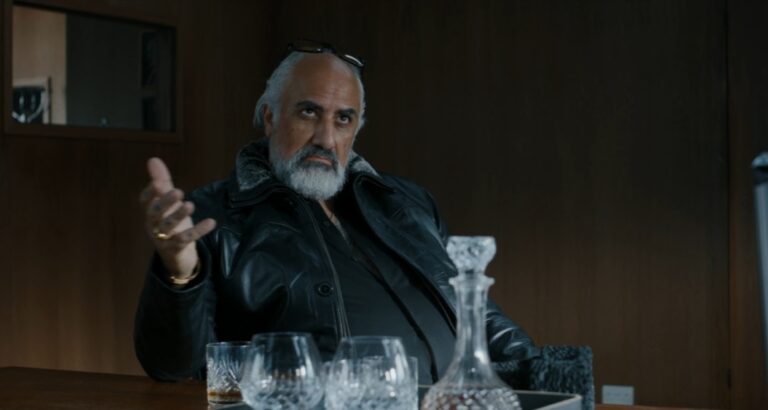
Monster: The Lizzie Borden Story Ending Explained – Netflix vs. Real Life
I’ve watched every season of Ryan Murphy’s Monster anthology the same way some people watch football on Sundays — with snacks, a group chat blowing up in real time, and zero chill. Dahmer messed me up. The Menendez season had me arguing with strangers online for a week. So when Netflix dropped the fourth installment this September, jumping all the way back to 1892 Fall River, Massachusetts, I figured I knew what I was walking into.
I did not.
Monster: The Lizzie Borden Story takes the most infamous unsolved axe murder case in American history and does something previous seasons never dared — it hands us a definitive answer, then torches that answer with a finale so audacious it’s been living rent-free in true crime forums ever since. Here’s my honest breakdown of what the show actually did versus what history actually recorded, because the gap between the two is honestly the most interesting part of this whole season.
What Actually Happens In The Netflix Finale
Ella Beatty plays Lizzie, Vicky Krieps plays the family maid Bridget Sullivan (nicknamed “Maggie” in the household), and together they carry the back half of this season on their shoulders. In the show’s version of events, there’s no ambiguity left by the finale — Lizzie and Bridget aren’t just employer and employee. They’re lovers. And they’re co-conspirators who plan and carry out the murders of Andrew and Abby Borden (Charlie Hunnam and Rebecca Hall) together, as an act of rebellion against a household the series paints as suffocating and abusive.
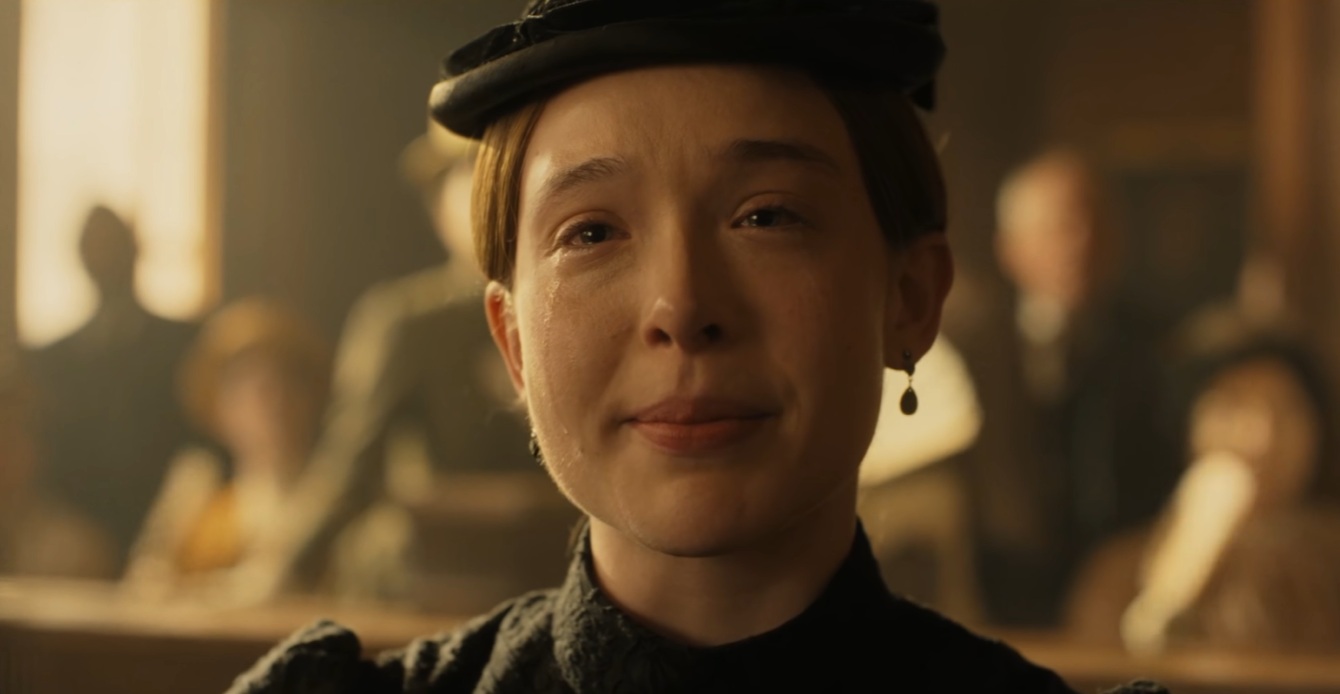
After the all-male jury acquits Lizzie — partly because Victorian society couldn’t fathom a “proper” woman capable of that kind of violence — the show pivots hard into wish-fulfillment territory:
- Bridget marries someone else briefly, then leaves him and comes back to Lizzie
- The two women become active suffragettes, pouring their money and time into the fight for women’s voting rights
- Their crime gets reframed on-screen as righteous fury against patriarchal control, not just a brutal double homicide
Then comes the scene everyone’s been arguing about. The finale, titled “Carnival,” cuts to Florida in 2002, where Sarah Paulson’s Aileen Wuornos is walking to her execution. As she’s led down the hall, she has a vision — Lizzie and Bridget appear to her, offering silent solidarity across more than a hundred years. It’s staged as this haunting, generational hand-off between women society branded as monsters.
It’s a genuinely striking piece of television. It’s also almost entirely fiction.
Bridget Sullivan Did Not Run Off With Lizzie — She Ran Away From Her
This is the part that gets me every time I see it discussed online like it might be secretly true. There is zero historical evidence of a romantic or criminal partnership between Lizzie Borden and Bridget Sullivan.
What we actually know: on the morning of August 4, 1892, Bridget was doing chores at the Borden house — including washing windows in brutal heat while she was reportedly feeling unwell. She later testified at trial about the timeline of that morning, including hearing Lizzie call out that her father had been killed.
After the acquittal in June 1893, Bridget didn’t stick around Fall River for a second act. She packed up, moved out west, and eventually settled in Montana, where she married a man named John Sullivan and lived a quiet, unremarkable life until her death in 1948. No suffrage movement. No reunion. No deathbed confession. She wanted nothing more to do with the Bordens, full stop.
| Netflix Version | Real Life |
|---|---|
| Lizzie and Bridget are lovers and co-killers | No evidence of any romantic or criminal relationship |
| Bridget returns to Lizzie after a failed marriage | Bridget cut all ties and moved to Montana permanently |
| They become suffragette activists together | Bridget never engaged in political activism; lived privately |
| Bridget dies in old age near Lizzie | Bridget died in Montana in 1948, decades removed from Fall River |
The Real Lizzie Wasn’t Living Her Best Life — She Was Living Alone
The show’s ending gives Lizzie warmth, community, and purpose. Real Lizzie got none of that. After the trial, she and her sister Emma inherited their father’s fortune and bought a large house in Fall River’s Highlands neighborhood, which Lizzie named Maplecroft. Money didn’t buy her acceptance, though — she was shut out of local churches, ignored by neighbors, and mocked with the same grim skipping-rope rhyme kids still know today.
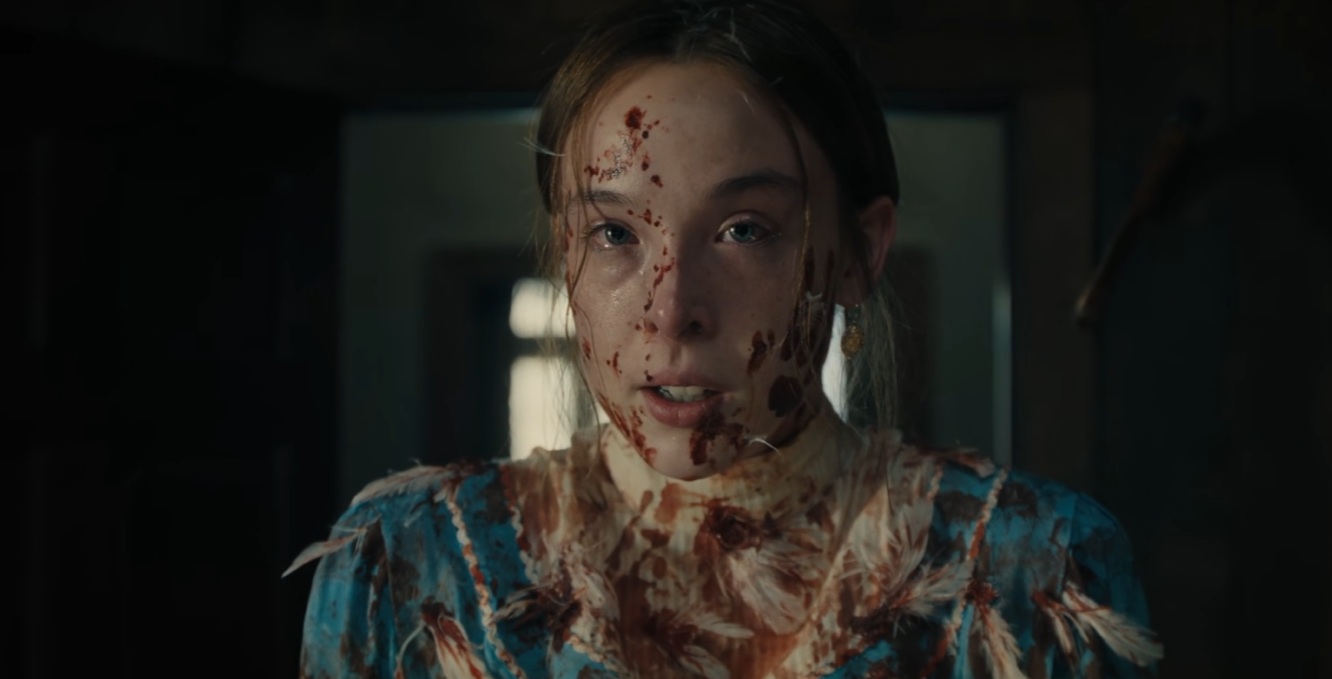
A few other things the timeline gets rearranged for dramatic effect:
- Lizzie’s real friendship with actress Nance O’Neil didn’t begin until around 1904, over a decade after the murders — the show moves it earlier to fuel trial-era tension
- That friendship, and the gossip it generated, is what actually drove Emma out of Maplecroft in 1905 — the sisters never spoke again after that
- Lizzie changed her name to Lizbeth A. Borden, retreated into a mostly reclusive life, and became devoted to animal welfare rather than political causes
She died of pneumonia on June 1, 1927, at 66. Emma died just nine days later in New Hampshire — still estranged. Lizzie left most of her fortune to the Fall River Animal Rescue League, which honestly tells you more about how she actually spent her final years than any suffrage subplot could.
So What’s Aileen Wuornos Doing In A Show Set In 1892?
Purely thematic — there’s no way around it. Lizzie Borden died in 1927. Aileen Wuornos wasn’t born until 1956 and was executed in Florida in 2002. These two women never occupied the same century, let alone the same room.
What Ryan Murphy and co-showrunner Ian Brennan are clearly going for is a parallel: Lizzie got acquitted because the legal system of her era literally couldn’t picture a woman committing that kind of violence, while Wuornos was executed after her self-defense claims against abusive men were rejected outright. Placing them together in that final vision is the show arguing that both cases sit on the same historical throughline of women reacting to systemic abuse, just separated by 110 years.
It’s a bold artistic swing. Whether it earns that swing is where the internet has split right down the middle.
Why Fans Can’t Agree On This Ending
I’ve scrolled enough true crime subreddits and YouTube comment sections this month to map out the exact fault line:
Team “It’s Gothic Fiction, Relax”: Praises Beatty and Krieps’ performances, treats the season as a dark fantasy riff on real events rather than a documentary, and appreciates that it’s exploring bigger ideas about gender and violence rather than just restaging a courtroom drama.
Team “This Is Historically Irresponsible”: Argues that because the actual Borden case remains officially unsolved, presenting a specific, dramatized version as narrative “truth” muddies public understanding of real history — and that turning a double axe murder into a suffrage romance edges uncomfortably close to glorifying it.
Ian Brennan has defended the choices in interviews, framing the season’s real goal as capturing the psychological pressure cooker of Victorian womanhood rather than delivering a factual reenactment. I get that intent. I still think the show owed casual viewers a clearer line between “here’s a theory” and “here’s what we’re presenting as your emotional resolution.”
Not a Stranger Season 2: Renewed or Canceled? Netflix Release Date, Cast, and Ending Explained
The Bottom Line
Strip away the axe murders and the courtroom drama, and what actually happened to these three women is almost sadder than anything Netflix invented: Lizzie died isolated in the town that never forgave her, Bridget spent decades quietly rebuilding a life a thousand miles away, and Aileen faced her execution completely alone, seventy-five years after Lizzie was even gone. The show gives them each other in the end. History didn’t.
That doesn’t make the finale bad television — I think it’s some of the boldest stuff this anthology has attempted. It just means you should probably close the Wikipedia tab before you let it convince you any of that actually happened.